
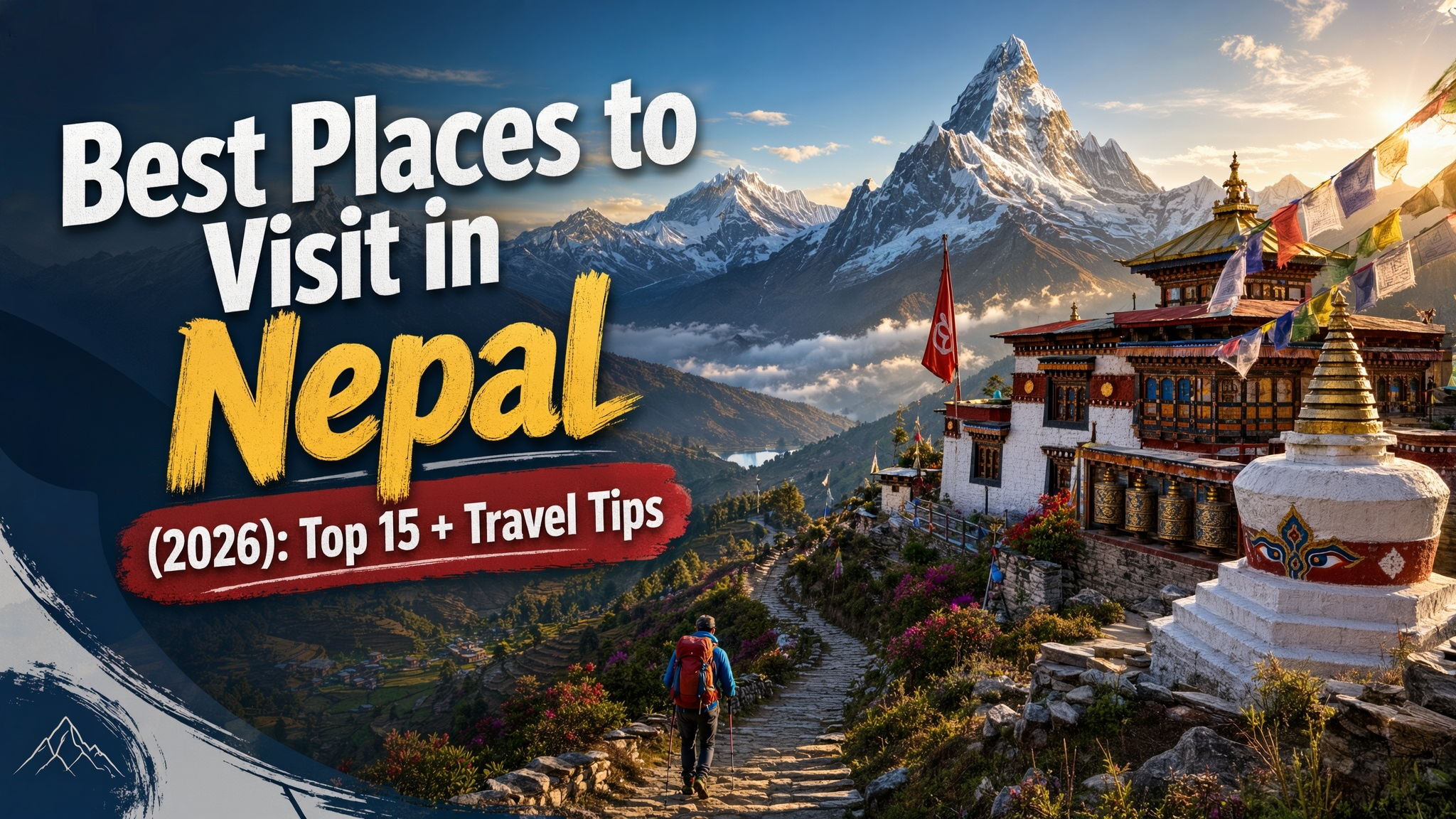
Nepal is one of South Asia's most diverse travel destinations, offering everything from the world's highest mountains to historic cities, peaceful lakes, national parks and traditional Himalayan villages. Whether you are planning a family holiday, a romantic getaway, a cultural tour or an adventurous trekking trip, Nepal has destinations for many kinds of travellers.
From the lakeside beauty of Pokhara to the ancient temples of Kathmandu, the wildlife of Chitwan National Park and the dramatic landscapes of the Annapurna and Everest regions, every destination offers a different experience.
This guide covers 15 of the best places to visit in Nepal in 2026, including highlights, recommended seasons, trip durations and practical planning tips. Conditions, entry fees, permits and transport schedules can change, so confirm them before travelling.
1. Pokhara – Best for Lakes and Mountain Views
Pokhara is one of Nepal's most popular tourist destinations. Located beside Phewa Lake and surrounded by hills and Himalayan peaks, it is a good choice for families, couples, solo travellers and adventure seekers.
Top attractions:
- Phewa Lake: Enjoy boating and views of the surrounding mountains when the weather is clear.
- World Peace Pagoda: Visit this hilltop Buddhist monument for panoramic views of Pokhara and the lake.
- Sarangkot: A popular viewpoint for sunrise and mountain scenery.
- Davis Falls: See the waterfall disappear into an underground passage.
- Gupteshwor Mahadev Cave: Explore a cave with religious significance near Davis Falls.
- International Mountain Museum: Learn about Himalayan mountaineering and mountain communities.
- Begnas Lake: Enjoy a quieter lakeside experience outside the busy city centre.
Visitors can enjoy boating, paragliding, cycling, short hikes, lakeside dining and mountain-view photography. Adventure activities depend on weather, operator standards and local conditions.
Best time to visit: September–November and March–May for generally favourable weather and mountain views. Recommended duration: 2–4 days. Best for: Couples, families, adventure lovers and first-time visitors.
2. Kathmandu Valley – Best for Culture and History
Kathmandu Valley is the cultural heart of Nepal. It combines historic royal squares, Buddhist stupas, Hindu temples, traditional Newari architecture and lively local markets.
Top attractions:
- Pashupatinath Temple: One of the most important Hindu temples dedicated to Lord Shiva.
- Boudhanath Stupa: A major Buddhist pilgrimage site surrounded by monasteries and shops.
- Swayambhunath Stupa: Also known as the Monkey Temple, it offers city views and important Buddhist and Hindu heritage.
- Kathmandu Durbar Square: Explore historic palace buildings, courtyards and traditional architecture.
- Patan Durbar Square: Famous for Newari craftsmanship, temples and the Patan Museum.
- Bhaktapur Durbar Square: Discover traditional pottery, woodcarving and historic buildings.
- Garden of Dreams: A restored garden offering a peaceful break from the busy city.
Several of these sites are UNESCO World Heritage properties or form part of the Kathmandu Valley World Heritage listing. Explore historic neighbourhoods, sample Newari cuisine, visit museums and observe religious traditions respectfully.
Best time to visit: October–April for generally comfortable sightseeing weather, though Kathmandu can be visited year-round. Recommended duration: 2–4 days. Best for: History lovers, cultural travellers, families and international visitors.
3. Chitwan National Park – Best for Wildlife
Chitwan is one of Nepal's leading wildlife destinations. Its subtropical forests, grasslands and river habitats support a rich variety of animals and birds. The region is especially known for the greater one-horned rhinoceros, gharial crocodiles and the possibility of seeing Bengal tigers in their natural habitat.
Top attractions and experiences:
- Jeep safaris in permitted park areas
- Birdwatching in forests and wetlands
- Guided nature walks with authorised naturalists
- Canoe trips on designated river routes
- Visits to local Tharu cultural programmes and communities
Wildlife sightings are never guaranteed. Follow park regulations, use authorised guides and maintain a safe distance from animals.
Best time to visit: October–March is generally pleasant for wildlife activities; access and conditions vary by season. Recommended duration: 2–3 days. Best for: Families, nature lovers, photographers and wildlife enthusiasts.
4. Lumbini – Best for Spiritual Tourism
Lumbini, in Rupandehi District in southern Nepal, is traditionally recognised as the birthplace of Siddhartha Gautama, the Buddha. It is an important pilgrimage destination for Buddhists from around the world.
Top attractions:
- Maya Devi Temple: The central sacred site associated with the Buddha's birth.
- Ashoka Pillar: An important historical monument associated with Emperor Ashoka's pilgrimage.
- Sacred Garden: A peaceful area for reflection and religious visits.
- Monastic Zone: Explore monasteries built by Buddhist communities from different countries.
- World Peace Pagoda: A prominent Buddhist monument in the wider Lumbini area.
Walk around the sacred garden, visit monasteries, learn about Buddhist history and experience the calm atmosphere of the pilgrimage area.
Best time to visit: October–March, when temperatures are generally more comfortable. Recommended duration: 1–2 days. Best for: Pilgrims, cultural travellers, history enthusiasts and peaceful holidays.
5. Everest Region – Best for Himalayan Adventure
The Everest region is home to Mount Everest, the world's highest mountain above sea level, and is one of the world's best-known trekking destinations. Travellers can experience dramatic mountain scenery, Sherpa culture, Buddhist monasteries and traditional Himalayan settlements.
Top attractions:
- Everest Base Camp Trek: A demanding multi-day trek through the Khumbu region.
- Namche Bazaar: A major Sherpa settlement and important acclimatisation stop.
- Tengboche Monastery: A renowned monastery with impressive mountain surroundings.
- Kala Patthar: A popular viewpoint for close-up views of Mount Everest.
- Gokyo Lakes: High-altitude lakes reached by a challenging trekking route.
Trekking at high altitude carries risks, including acute mountain sickness. Allow time for acclimatisation, understand the route difficulty and consider a qualified guide. Flights to Lukla are weather-dependent, and trekking access and permit requirements should be checked before departure.
Best time to trek: March–May and October–November are principal trekking seasons. Recommended duration: Approximately 10–16 days for a typical Everest Base Camp itinerary, depending on route and acclimatisation. Best for: Experienced hikers, adventure travellers and mountain enthusiasts.
6. Annapurna Region – Best for Scenic Treks
The Annapurna region offers a wide range of trekking experiences, from shorter routes through villages and rhododendron forests to demanding high-altitude journeys.
Top attractions:
- Annapurna Base Camp: A classic trek into a spectacular mountain sanctuary.
- Annapurna Circuit: A varied route crossing high mountain terrain and Thorong La Pass.
- Ghorepani and Poon Hill: Popular for sunrise views over the Annapurna and Dhaulagiri ranges.
- Mardi Himal: A scenic trekking route with close-up views of Himalayan peaks.
- Traditional Gurung villages: Experience local architecture, hospitality and mountain culture.
Trek duration and difficulty depend on the chosen route. High passes may be affected by snow, weather and seasonal trail conditions.
Best time to trek: March–May and October–November. Recommended duration: 3–5 days for some shorter routes; approximately 7–14 days or longer for major treks. Best for: Trekkers, photographers, nature lovers and adventure travellers.
7. Mustang – Best for Himalayan Landscapes
Mustang is famous for its arid valleys, colourful cliffs, traditional settlements and distinctive Tibetan-influenced culture. The landscape is very different from the green hills and forests found in many other parts of Nepal.
Top attractions:
- Lo Manthang: A historic walled settlement in Upper Mustang.
- Kagbeni: A traditional village near the gateway to Upper Mustang.
- Muktinath Temple: An important pilgrimage site for both Hindu and Buddhist visitors.
- Jomsom: A major settlement and transport hub in the Mustang region.
- Ancient monasteries and caves: Explore the region's religious and cultural heritage where access is permitted.
Upper Mustang has special access and permit requirements. Verify the latest rules, fees and guide requirements before travelling.
Best time to visit: May–October is often suitable for exploring the rain-shadow landscapes, although conditions vary. Recommended duration: 3–5 days for parts of Lower Mustang; 7–12 days or longer for Upper Mustang. Best for: Photographers, cultural travellers, hikers and people seeking distinctive landscapes.
8. Bandipur – Best for a Peaceful Hill-Town Escape
Bandipur is a charming hilltop settlement known for its preserved Newari architecture, traditional streets and mountain views. It offers a slower pace than Nepal's larger tourist cities.
Top attractions:
- Bandipur Bazaar: Walk through traditional buildings, cafés and small shops.
- Thani Mai Temple: A popular viewpoint for sunrise and sunset when the weather is clear.
- Siddha Cave: A large cave visited on guided excursions.
- Nearby villages and trails: Explore the countryside and surrounding hills.
Enjoy short hikes, local food, traditional architecture and relaxed views of the hills and mountains.
Best time to visit: October–April. Recommended duration: 1–2 days. Best for: Couples, families, photographers and travellers seeking a quiet getaway.
9. Ilam – Best for Tea Gardens and Green Hills
Ilam, in eastern Nepal, is known for rolling green hills, tea plantations, a cool climate and scenic countryside. It is appealing to travellers who want to enjoy nature without committing to a demanding Himalayan trek.
Top attractions:
- Kanyam Tea Garden: A popular place to see tea plantations and take photographs.
- Antu Danda: Known for sunrise views and, in clear weather, views towards the eastern Himalayas.
- Fikkal Bazaar: A convenient stop for local food and exploring the surrounding area.
- Local tea estates: Learn about tea cultivation and enjoy locally produced tea where visitor access is available.
Best time to visit: October–April for clearer views in many conditions; spring brings lush landscapes, though fog and rain can affect visibility. Recommended duration: 2–3 days. Best for: Couples, families, nature lovers and relaxed road trips.
10. Rara Lake – Best for Remote Natural Beauty
Rara Lake, in northwestern Nepal, is the country's largest lake by surface area. Surrounded by forested hills and mountain scenery, it offers a peaceful alternative to busier tourist destinations.
Top attractions:
- Rara Lake: Admire the changing colours of the water and surrounding landscapes.
- Rara National Park: Explore forest habitats and observe wildlife from permitted areas.
- Lake viewpoints: Enjoy panoramic scenery from designated trails.
- Nearby villages: Experience the culture and everyday life of remote mountain communities.
Getting to Rara generally requires more planning than visiting Pokhara or Kathmandu. Road conditions, flights, accommodation and seasonal access can affect travel time.
Best time to visit: September–October and April–June can offer rewarding conditions, depending on weather and access. Recommended duration: 3–5 days or longer, depending on the starting point and transport. Best for: Nature lovers, photographers, hikers and travellers seeking quieter destinations.
11. Janakpur – Best for Religious and Cultural Tourism
Janakpur, in Madhesh Province, is an important religious destination associated with the Hindu epic Ramayana and the tradition of Sita, also known as Janaki.
Top attractions:
- Janaki Mandir: An impressive temple dedicated to Goddess Sita.
- Ram Mandir: A historic religious site in the city.
- Ganga Sagar: A sacred pond visited by pilgrims.
- Local markets: Explore regional food, crafts and everyday life.
Janakpur is especially lively during major religious festivals, including Vivah Panchami, when celebrations attract pilgrims and visitors.
Best time to visit: October–March is generally more comfortable for sightseeing. Festival dates vary by the lunar calendar. Recommended duration: 1–2 days. Best for: Pilgrims, families, cultural travellers and history enthusiasts.
12. Nagarkot – Best for Sunrise and Short Getaways
Nagarkot is a hill station near Kathmandu known for panoramic Himalayan views on clear days. It is convenient for travellers who want a short break without a long journey.
Top attractions:
- Sunrise viewpoints: See the changing colours of the hills and Himalayan range when visibility permits.
- Nagarkot View Tower: A popular viewpoint when access is available.
- Nature trails: Walk through nearby villages and countryside.
- Bhaktapur: Combine the trip with a visit to the historic city.
Mountain views are not guaranteed. Cloud cover, haze and weather can significantly affect visibility.
Best time to visit: October–April is generally favourable for clearer mountain views. Recommended duration: 1–2 days. Best for: Couples, families, photographers and Kathmandu residents seeking a short holiday.
13. Dhulikhel – Best for Mountain Views and Heritage
Dhulikhel is a historic town east of Kathmandu, known for traditional Newari architecture, hilltop views and nearby hiking routes.
Top attractions:
- Old Town: Explore traditional houses, temples and narrow streets.
- Kali Temple: Visit a hilltop religious site reached by a climb.
- Namobuddha: Explore an important Buddhist pilgrimage site in the surrounding region.
- Local hiking routes: Enjoy countryside trails and views across the hills.
Best time to visit: October–April. Recommended duration: 1–2 days. Best for: Couples, families, cultural travellers and weekend visitors.
14. Gorkha – Best for Nepalese History
Gorkha holds an important place in Nepal's political and military history. It is associated with King Prithvi Narayan Shah, who began the unification of modern Nepal.
Top attractions:
- Gorkha Durbar: A historic palace complex with religious and historical significance.
- Gorkha Museum: Learn about local history and the unification period, subject to opening arrangements.
- Manakamana Temple: A well-known Hindu pilgrimage site accessible by cable car from the Kurintar area, subject to operation.
- Local villages: Explore traditional settlements and the surrounding hills.
Best time to visit: October–April. Recommended duration: 1–2 days, or longer if combining the trip with nearby destinations. Best for: History enthusiasts, pilgrims, families and domestic travellers.
15. Bardia National Park – Best for a Quieter Wildlife Adventure
Bardia National Park in western Nepal is a major conservation area known for grasslands, river systems, forests and wildlife. It can offer a quieter safari experience than some more frequently visited wildlife destinations.
Top attractions and experiences:
- Guided wildlife safaris in permitted areas
- Birdwatching and nature photography
- Visits to local Tharu communities and cultural programmes
- Exploring the park's diverse habitats with authorised guides
Bardia is known for tiger conservation, but seeing a tiger is never guaranteed. Wildlife viewing depends on season, animal movement and field conditions.
Best time to visit: October–March is generally favourable for wildlife excursions. Recommended duration: 2–4 days. Best for: Wildlife enthusiasts, photographers, nature lovers and travellers seeking a less crowded safari destination.
Best Places to Visit in Nepal by Travel Interest
| Travel interest | Recommended destinations |
|---|---|
| Lakes and mountain scenery | Pokhara, Rara Lake |
| Culture and heritage | Kathmandu Valley, Bhaktapur, Patan |
| Wildlife safari | Chitwan, Bardia |
| Himalayan trekking | Everest, Annapurna |
| Romantic holidays | Pokhara, Bandipur, Nagarkot |
| Family holidays | Pokhara, Kathmandu, Chitwan |
| Religious tourism | Lumbini, Janakpur, Muktinath |
| Tea gardens and green hills | Ilam |
| Unique landscapes | Mustang |
| History | Gorkha, Kathmandu Valley |
| Short trips from Kathmandu | Nagarkot, Dhulikhel, Bandipur (with additional travel) |
Best Time to Visit Nepal
Nepal can be visited throughout the year, but the best time depends on destination, altitude and planned activities.
### Autumn: September to November
Autumn is one of Nepal's most popular travel seasons. Many areas enjoy pleasant temperatures and good mountain visibility, although weather conditions vary. It is particularly suitable for trekking, sightseeing and mountain photography.
### Winter: December to February
Winter is a good time for lower-altitude sightseeing, cultural tours and wildlife experiences in the southern plains. Higher trekking routes can be very cold, and snow may affect access to mountain passes.
Destinations often considered for winter include Kathmandu, Pokhara, Chitwan, Lumbini and lower hill towns.
### Spring: March to May
Spring brings warmer temperatures, blooming rhododendrons in many hill and mountain areas, and favourable trekking conditions on many routes. Pokhara, the Annapurna region and Everest region are popular choices.
### Monsoon: June to August
The monsoon brings heavy rainfall to many parts of Nepal. Landslides, road disruptions, leeches on trails and reduced mountain visibility can affect travel. Some rain-shadow areas, including parts of Mustang, can be attractive during this season. Check road conditions and forecasts before travelling.
How Much Does It Cost to Travel in Nepal?
The cost of travelling in Nepal depends on transport, accommodation, food, activities and destination. A short domestic trip can be much less expensive than a guided high-altitude trek.
Common expenses include:
- Transportation: Public buses, tourist buses, private vehicles and domestic flights.
- Accommodation: Guesthouses, budget hotels, mid-range hotels and luxury resorts.
- Food: Local restaurants, cafés and hotel dining.
- Entry fees: Heritage sites, national parks and conservation areas.
- Permits and guides: Required or applicable for certain trekking routes and restricted areas.
- Activities: Safaris, boating, paragliding, cable cars and guided excursions.
As a broad planning estimate, a budget traveller might spend around NPR 2,000–4,000 per person per day, a mid-range traveller around NPR 5,000–12,000, and a higher-comfort traveller NPR 15,000 or more per day. These are illustrative estimates, not verified October 2026 prices. Flights, trekking packages, permits and expensive activities can increase the total substantially.
Before booking, confirm current prices directly with accommodation providers, transport operators and relevant authorities.
Essential Travel Tips for Visiting Nepal
### 1. Plan your route according to available time
Avoid trying to cover too many distant destinations in a short holiday. Travel between regions can take longer than expected because of road conditions, weather and transport schedules.
### 2. Check weather and road conditions
Mountain weather can change quickly. During the monsoon, landslides and flooding may affect roads. Domestic flights can also be delayed or cancelled.
### 3. Check permits before trekking
Permit requirements vary by trekking area and may change. Verify the latest rules with relevant authorities or a reputable trekking operator before departure.
### 4. Prepare for altitude
For high-altitude treks, ascend gradually, include acclimatisation days and learn the symptoms of altitude sickness. Seek prompt medical assistance if symptoms worsen; do not continue ascending when serious symptoms develop.
### 5. Respect local customs
Dress appropriately at religious sites, ask permission before photographing people, follow local instructions and respect restrictions at temples and monasteries.
### 6. Carry suitable clothing
Even when the lowlands are warm, mountain destinations can be cold. Bring layers, rain protection, comfortable walking shoes and appropriate trekking equipment.
### 7. Keep some cash available
Cash is useful in rural areas, smaller shops and remote destinations where card payments or reliable connectivity may not be available.
### 8. Choose responsible tourism
Use authorised guides and operators, avoid disturbing wildlife, reduce plastic waste and respect local communities and protected areas.
Frequently Asked Questions About the Best Places to Visit in Nepal
What is the best place to visit in Nepal for the first time? Pokhara and Kathmandu Valley are excellent starting points. Kathmandu offers culture and history, while Pokhara provides lakeside relaxation and mountain scenery. Combining both gives a varied introduction to Nepal.
Which is the most beautiful place in Nepal? Beauty is subjective, but Pokhara, Rara Lake, the Annapurna region, the Everest region and Mustang are among Nepal's admired destinations. Each offers a different landscape and travel experience.
Which places are best for a family trip in Nepal? Pokhara, Kathmandu Valley, Chitwan, Bandipur and Nagarkot are good options for many family holidays. Choose activities and travel times according to the ages, health and mobility of family members.
What are the best places to visit in Nepal for couples? Pokhara, Bandipur, Nagarkot and Dhulikhel are popular choices for couples because of their scenic views, relaxing atmosphere and accommodation options.
Which places in Nepal are best for adventure? The Everest and Annapurna regions are famous for trekking. Pokhara offers activities such as paragliding and boating, while Chitwan and Bardia are known for guided wildlife experiences.
Can I visit Nepal on a low budget? Yes. Public transportation, local restaurants, guesthouses and carefully selected destinations can help keep costs down. Plan your route efficiently and check entry fees and activity prices in advance.
How many days are enough to explore Nepal? Five to seven days can be enough for a short trip combining Kathmandu and Pokhara. Ten to fourteen days allow more time for additional destinations. Major Himalayan treks usually require a separate itinerary with time for acclimatisation.
Is Nepal safe for tourists? Many travellers visit Nepal safely every year. However, road travel, high-altitude trekking, changing weather and outdoor adventure activities carry risks. Follow local guidance, use reputable operators and obtain suitable travel insurance.
Which places in Nepal are best to visit in winter? Kathmandu Valley, Pokhara, Chitwan and Lumbini are often suitable for winter sightseeing. Higher mountain routes may experience freezing temperatures, snowfall and access restrictions.
What is the best time to see mountains in Nepal? Autumn and spring are generally popular for mountain views. Visibility is never guaranteed, so allow flexibility in your itinerary and check the forecast.
Conclusion
Nepal offers an extraordinary variety of destinations, from the lakes and viewpoints of Pokhara to the cultural landmarks of Kathmandu, the wildlife habitats of Chitwan and Bardia, and the dramatic mountain landscapes of Everest, Annapurna and Mustang.
The best place to visit depends on your budget, travel dates, interests and available time. For a balanced first trip, consider Kathmandu Valley and Pokhara. For wildlife, choose Chitwan or Bardia. For trekking, explore the Annapurna or Everest regions with appropriate preparation.
Plan carefully, check current travel conditions and respect local communities and the natural environment to make the most of your journey.
Frequently asked questions
What is the best place to visit in Nepal for the first time?
Pokhara and Kathmandu Valley are excellent starting points. Kathmandu offers culture and history, while Pokhara provides lakeside relaxation and mountain scenery.
Which is the most beautiful place in Nepal?
Beauty is subjective, but Pokhara, Rara Lake, the Annapurna region, the Everest region and Mustang are among Nepal's admired destinations, each with a distinct landscape.
Which places are best for a family trip in Nepal?
Pokhara, Kathmandu Valley, Chitwan, Bandipur and Nagarkot suit many family itineraries. Choose activities and travel times according to the ages, health and mobility of your group.
What are the best places to visit in Nepal for couples?
Pokhara, Bandipur, Nagarkot and Dhulikhel are popular options for couples seeking scenery and a relaxed stay.
Which places in Nepal are best for adventure?
The Everest and Annapurna regions are known for trekking. Pokhara offers activities such as paragliding and boating, while Chitwan and Bardia offer guided wildlife experiences.
Can I visit Nepal on a low budget?
Yes. Public transportation, local restaurants, guesthouses and carefully selected destinations can help manage costs. Check entry fees and activity prices in advance.
How many days are enough to explore Nepal?
Five to seven days can suit a short Kathmandu and Pokhara trip. Ten to fourteen days allow more destinations, while major Himalayan treks need their own itinerary and acclimatisation time.
Is Nepal safe for tourists?
Many travellers visit Nepal safely, but road travel, altitude, changing weather and outdoor activities carry risks. Follow local guidance, use reputable operators and obtain suitable travel insurance.
Which places in Nepal are best to visit in winter?
Kathmandu Valley, Pokhara, Chitwan and Lumbini are often suitable for winter sightseeing. Higher mountain routes can have freezing temperatures, snow and access restrictions.
What is the best time to see mountains in Nepal?
Autumn and spring are popular for mountain views, but visibility is never guaranteed. Allow flexibility in your itinerary and check the forecast.