
Quick Answer: Third-Party or Comprehensive?
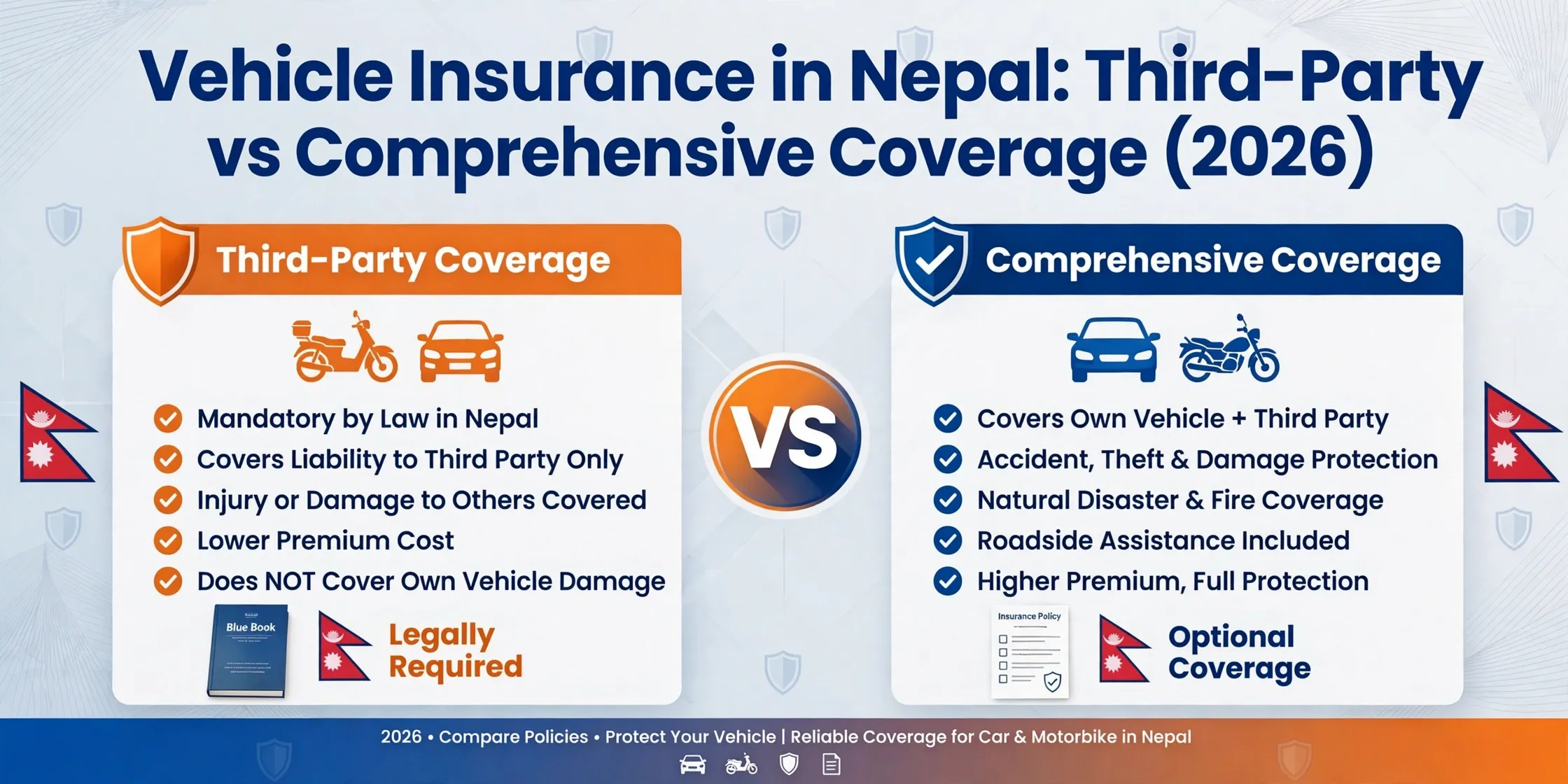
In Nepal, the legally required motor-insurance minimum is generally a third-party liability policy. It is intended to cover specified injury, death, or property-damage liability to others caused by the insured vehicle, subject to the policy and legal limits. It does not ordinarily pay to repair or replace your own vehicle.
Comprehensive insurance usually includes third-party liability and adds cover for damage to your own vehicle from listed events. The exact events, limits, deductibles, add-ons, and exclusions depend on the policy. Before buying, compare the policy wording and a current written quote—not just the label “full insurance.”
Check current insurance requirements with the relevant Department of Transport Management office and the Nepal Insurance Authority. Requirements and tariffs can change.
What Third-Party Insurance Covers
Third-party insurance addresses specified liability to someone other than the policyholder when a covered vehicle causes an incident. The policy and applicable law determine who is covered, the events covered, exclusions, and maximum payment.
It does not ordinarily cover:
- Repair or replacement of your own vehicle after a collision
- Theft of your own vehicle
- Fire or natural-disaster damage to your own vehicle
Driver or passenger accident benefits may be provided by a separate or included benefit, depending on the policy. Check the schedule rather than assuming it is included in every third-party plan.
What Comprehensive Insurance Adds
Comprehensive motor insurance typically combines third-party liability with own-damage protection for the insured vehicle. Depending on the insurer and selected cover, listed events may include collision, fire, theft, or certain natural disasters. Optional extensions may be available for specific risks.
Comprehensive does not mean “all loss is covered.” Read the policy schedule and wording for:
- The insured or declared value and how it is determined
- Covered events and geographic limits
- Deductibles or excess you must pay on a claim
- Parts, accessories, battery, or special equipment limits
- Required add-ons for flood, landslide, earthquake, or other risks
- Driver, use, and licence conditions
- Exclusions and claim-notification requirements
Third-Party vs Comprehensive Comparison
| Question | Third-party policy | Comprehensive policy |
|---|---|---|
| Covers specified liability to others | Usually, within policy and legal limits | Usually included, subject to the policy |
| Covers damage to your own vehicle | Not ordinarily | May cover listed events |
| Covers theft or fire damage to your vehicle | Not ordinarily | Only if included under the policy terms |
| Meets the legal minimum | Generally the minimum required cover; verify current requirements | Usually includes third-party cover, but verify the policy meets the current minimum |
| Price basis | Applicable tariff and vehicle category | Third-party component plus own-damage premium and selected terms |
| Suitable when | You need the required liability cover and can manage your own repair costs | You want broader protection for a valuable vehicle and accept the additional premium and deductible |
This is a general comparison, not a substitute for the policy wording. A particular insurer may offer different benefits or exclusions under similar product names.
How Vehicle Insurance Premiums Are Set
The price depends on the vehicle type and class, applicable third-party tariff, own-damage cover, insured value, vehicle age, selected add-ons, deductible, applicable taxes or charges, and any discount for which you qualify.
Third-party premiums follow the applicable tariff and vehicle category. Comprehensive quotes add an own-damage component and may vary with the value and risk characteristics of the vehicle. Ask a licensed insurer to show each component separately on a dated quote.
The sample premiums in older online articles may not reflect the current fiscal-year tariff, insurer calculation, taxes, or the cover actually selected. Do not rely on a sample amount as a binding price. A no-claim discount, if offered, may apply only to eligible portions of the premium; ask the insurer to show how it was applied.
Which Cover Should You Choose?
- New or high-value vehicle: Compare comprehensive policies if the cost of repair or replacement would be difficult to absorb.
- Vehicle purchased on finance: Check the loan agreement. A bank or finance company may require comprehensive insurance for the loan period.
- Older, lower-value vehicle: Compare the comprehensive premium and deductible with the vehicle's current value and your ability to pay for repairs yourself.
- Vehicle used frequently or for business: Check whether the policy covers the actual use, drivers, and route. A personal-use policy may not fit commercial use.
- Electric vehicle: Confirm how the policy treats the traction battery, charger, accessories, water or flood damage, and repair network. Do not assume all battery risks are included.
The right choice depends on the policy terms and your ability to bear a loss—not only on the vehicle's age. Ask at least two licensed insurers for comparable written quotes with the same insured value, deductibles, and add-ons.
How to Make a Vehicle Insurance Claim
- Make the scene safe. Check for injuries and contact emergency services or police where needed. Do not put yourself or others at further risk.
- Notify the insurer promptly. Use the official contact details on the policy and request a claim reference number.
- Record what happened. Take clear photographs of the vehicles, damage, number plates, road conditions, and location, if safe and lawful. Collect the other party's contact and vehicle details.
- Follow reporting instructions. Ask the insurer whether a police report or other official record is required for the incident.
- Arrange inspection. Follow the insurer's directions for inspection, an approved repairer, or an estimate.
- Submit the claim form and documents. Keep copies and obtain an acknowledgement.
- Wait for authorization before major repairs. Confirm the approved scope, deductible, parts, and payment method before work begins.
- Review the settlement. Ask for a written breakdown if the insurer approves less than the repair estimate or applies an exclusion or deduction.
For theft, fire, injury, or a serious accident, report promptly to the appropriate authorities as well as the insurer. Never leave the scene of an injury accident without following police and legal requirements.
Documents Commonly Needed for a Claim
Ask your insurer for its exact list. Depending on the claim, it may request:
- Claim form and policy schedule
- Vehicle registration certificate or bluebook
- Valid driving licence for the driver at the time of the incident
- Citizenship or other identification of the insured
- Photographs and incident details
- Repair estimate, inspection report, or garage invoices
- Police report for an incident where it is required
- FIR or other official report for theft
- Bank details or additional documents requested for settlement
Provide accurate information and report all relevant facts. Keep the originals safe and submit copies unless the insurer specifically requires an original and gives you a receipt.
Exclusions and Policy Conditions
Common policy conditions or exclusions can include driving without a valid licence, use outside the permitted vehicle class or policy purpose, intoxication, intentional damage, ordinary wear and tear, mechanical failure without an insured event, or an incident outside the policy period. This list is not exhaustive and does not determine whether a specific claim is covered.
Before signing, check the definitions, exclusions, deductibles, driver restrictions, claim-notice procedure, repair requirements, and the insurer's dispute process. Ask the insurer to explain any clause you do not understand in writing.
Before You Buy or Renew
- Confirm the current legal minimum with the relevant transport office or insurer.
- Check that the insurer is licensed and use its official channel.
- Compare the written schedule and policy wording, not just the premium.
- Verify the insured vehicle details, registration number, use, and declared value.
- Confirm add-ons, deductibles, limits, exclusions, and the claims procedure.
- For a financed vehicle, check the lender's insurance requirement.
- Keep your policy, payment receipt, and claim contact details with your bluebook. See our bluebook renewal guide.
Official Sources and Final Note
For current regulations, insurer licensing, and directives, consult the Nepal Insurance Authority, including its laws and directives. For vehicle registration and renewal requirements, contact the relevant office through the Department of Transport Management. Ask the insurer for the current tariff, product wording, and claim requirements before purchasing or filing.
Last updated: November 7, 2026. Insurance tariffs, legal requirements, and policy benefits can change. Coverage is determined by the policy issued for your vehicle and applicable law. This guide provides general information, not an insurance quote or legal advice.
Frequently asked questions
Is third-party vehicle insurance mandatory in Nepal?
Vehicle owners are generally required to maintain the legally prescribed insurance for a registered vehicle. Confirm the current requirement and acceptable policy with the relevant Transport Management Office and insurer before registration or renewal.
What does third-party vehicle insurance cover?
It covers specified legal liability for injury, death, or property damage caused to other people, subject to the policy wording, limits, and law. It does not ordinarily cover damage to your own vehicle.
Does comprehensive insurance cover everything?
No. Comprehensive policies commonly combine third-party liability with own-damage cover, but covered events, limits, deductibles, add-ons, and exclusions vary. Read the schedule and wording for your exact policy.
How much does vehicle insurance cost in Nepal?
The premium depends on the vehicle class, applicable third-party tariff, declared or insured value, age, coverage, deductibles, add-ons, taxes, and any eligible discount. Ask licensed insurers for a current written quote; online examples may be outdated.
Is comprehensive insurance required for a vehicle bought on loan?
A lender may require comprehensive cover as a condition of the loan or hypothecation agreement. Check your loan documents and get the lender's insurance requirements in writing.
Can I renew my bluebook with third-party insurance?
The legally required policy and renewal checks can depend on current rules and the relevant transport office. Confirm that the policy meets the current requirement before visiting; see our bluebook renewal guide.
Does comprehensive insurance cover floods or landslides?
It may, but do not assume natural-disaster damage is included. Check the policy wording, exclusions, deductibles, and any required add-on for flood, landslide, earthquake, or similar events.
What should I do after an accident?
Make the scene safe, contact emergency services or police when needed, notify your insurer promptly, document the damage, and follow the insurer's inspection and repair instructions. Do not authorize major repairs before confirming the claims process.
Does a no-claim discount reduce the whole premium?
Any no-claim discount depends on the insurer's current rules and usually applies only to specified premium components. Ask the insurer to show the discount and calculation on the written quote.
Try the free tools
Put this guide to work — every Solutions Nepal tool is free and needs no signup.